Dyslexic Strengths in Adults: 15 Key Traits Explained
When people hear the word dyslexia, they often think about difficulties with reading, spelling and writing. However, dyslexic strengths in adults are...

For neurodivergent students at university, starting a new course can be an exciting time, but it can also feel overwhelming. There are new opportunities, new people to meet and a whole new level of independence.
But for many neurodivergent students, the transition to university can also feel overwhelming.
You may be wondering how you will manage the workload, navigate a new environment, make friends, cope with sensory demands or organise everything without the support you were used to at school or college.
You may also have questions about something else.
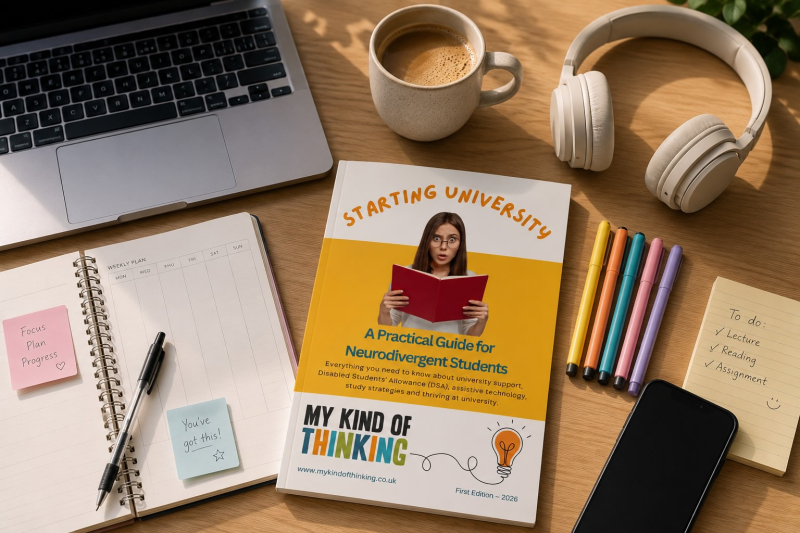
That’s why we’ve created a free resource: The Neurodivergent Student’s Guide to University.
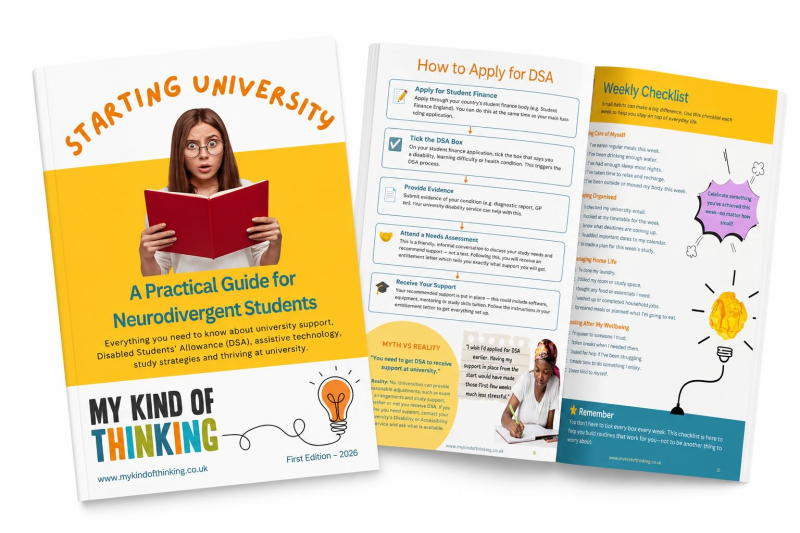
It’s a practical, 30-page guide designed to help neurodivergent students understand their options, know what they may be entitled to and feel more confident about asking for support.
One of the most important things we want students to know is that you don’t have to wait until things go wrong before asking for help.
We regularly meet students who arrive at university unaware that support is available to them. Some don’t know about Disabled Students’ Allowance (DSA). Others assume that because they didn’t receive additional support at school or college, they won’t be eligible for support at university.
That’s not necessarily the case.
Depending on your individual circumstances and needs, you may be able to access a range of support, which could include reasonable adjustments, assistive technology, specialist study skills support, mentoring or exam arrangements.
Understanding your options before you start your course can make a real difference.
There is a range of support available to neurodivergent students at university, depending on your individual needs and circumstances. This can include Disabled Students’ Allowance (DSA), reasonable adjustments, exam access arrangements, assistive technology, specialist study support and other practical help. Understanding what is available and how to access it can help you get the right support in place from the start of your course.
Disabled Students’ Allowance, commonly known as DSA, is one of the key sources of support available to eligible students in higher education.
It can help with some of the additional costs you may have because of a disability, long-term health condition, mental health condition or specific learning difference.
Importantly, DSA isn’t simply about receiving money. Depending on your needs, an assessment can help identify practical support and equipment that could make studying more accessible.
Our guide explains what DSA is, who may be eligible, what the application process involves and the types of support you might be able to access.
This is a question many students have.
You may be worried about being treated differently, concerned about stigma or simply unsure about what happens if you tell your university about your diagnosis or learning difference.
There isn’t a single right answer for every student.
Our guide explores disclosure and explains why sharing information about your needs can help your university put appropriate support and reasonable adjustments in place.
The important thing is that you understand your choices and can make an informed decision about what is right for you.
Another common concern is evidence.
Students often worry that they need extensive records from school or college, or that they won’t be able to access support because their difficulties weren’t identified earlier in their education.
The evidence required can depend on the type of support you’re applying for and your individual circumstances.
Our guide explains the importance of understanding what evidence may be needed and encourages students to seek advice rather than assuming they won’t be eligible.
Of course, university isn’t just about lectures, assignments and exams.
For many students, it’s also the first time they are living away from home, managing their own money, making new friends and navigating unfamiliar environments.
For neurodivergent students, these changes can bring additional challenges.
That’s why our guide also covers practical aspects of university life, including:
We want students to know that asking for support isn’t a sign that they aren’t capable of succeeding at university.
Getting the right support can help you make the most of your strengths.
The Neurodivergent Student’s Guide to University has been developed by specialist assessors who work with individuals with dyslexia, dyspraxia and ADHD, as well as supporting neurodivergent learners in higher education.
Through our work with students, families, schools, colleges and universities, we’ve seen how valuable it can be when students understand their needs and know where to turn for help.
We’ve also seen what can happen when students don’t know that support exists until they are already struggling.
We created this guide to help change that.
As Vicki Angel, Director of My Kind of Thinking, explains:
“Starting university is exciting, but it can also feel overwhelming, particularly for neurodivergent students who are navigating a completely new environment.”
The aim of the guide is simple: to provide clear, practical and reassuring information so that students can start university with a better understanding of the support available to them.
If you’re a student getting ready to start university, we’d encourage you to find out about support before you need it.
Speak to your university’s disability or accessibility service. Find out whether you may be eligible for DSA. Think about what worked well for you at school or college — and what you might need to be different at university.
And don’t be afraid to ask questions.
You don’t need to have everything figured out before you arrive on campus.
The Neurodivergent Student’s Guide to University is available to download completely free from My Kind of Thinking.
Whether you’re a student, parent, teacher, SENCO, careers adviser or college professional supporting someone preparing for university, we hope it provides useful information and reassurance.
Starting university is a big step. Knowing what support is available can help make that step feel a little more manageable.


When people hear the word dyslexia, they often think about difficulties with reading, spelling and writing. However, dyslexic strengths in adults are...

Starting university is a big milestone. It can feel exciting, full of possibility, and—quite understandably—a little overwhelming. If you are neurodivergent, disabled, or managing a mental health...

Many law students are unaware that they may be entitled to reasonable adjustments, such as extra time, during their exams....